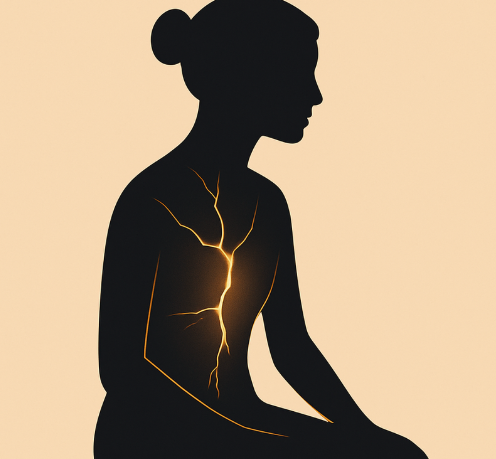
How to Protect Your Peace
Highly empathetic people don’t burn out because they’re weak. They burn out because they feel deeply, notice everything, and care longer than most people realize.
Empathy isn’t just emotional awareness. It’s nervous system awareness. It’s sensing tone shifts, emotional undercurrents, and unspoken pain. It’s absorbing stress in rooms where nothing has been said out loud. Over time, that constant attunement takes a toll.
Many empaths grow up learning how to read the emotional temperature of others before they learn how to check in with themselves. They become skilled at anticipating needs, preventing conflict, and offering comfort. What often goes unnoticed is how rarely that same care is returned to them.
Burnout for empathetic people doesn’t always look like collapse. Often, it looks like quiet depletion. You may still be functioning, still showing up, still helping others, yet feel increasingly drained, detached, or emotionally tired. Joy starts to feel muted. Rest doesn’t quite restore you. Even positive interactions can feel heavy.
This happens because empathy, when left unprotected, keeps the nervous system in a near-constant state of alertness. You’re not just responding to your own emotions. You’re tracking everyone else’s too. Over time, the body begins to treat emotional connection as labor rather than nourishment.
According to the National Institute of Mental Health, prolonged emotional stress can contribute to nervous system dysregulation, fatigue, and emotional exhaustion. For highly empathetic individuals, this stress is often invisible because it comes from caring, not crisis.
One of the most painful parts of empath burnout is the guilt that accompanies it. You may feel selfish for needing space. You may judge yourself for wanting quiet, distance, or rest. You may tell yourself that others have it worse, so you should be able to handle more.
But empathy without boundaries isn’t compassion. It’s self-abandonment.
Many empathetic people were taught, directly or indirectly, that their value comes from being helpful, understanding, or emotionally available. Over time, this creates an internal pressure to stay open even when the body is asking for rest. The result isn’t more love. It’s exhaustion.
Burnout often shows up as irritability, emotional numbness, resentment, or withdrawal. These aren’t signs that you’ve stopped caring. They’re signs that your system has been giving without replenishment for too long.
Protecting your peace doesn’t mean becoming cold or detached. It means learning to care without absorbing. It means allowing yourself to feel compassion without taking responsibility for emotions that aren’t yours to carry.
This shift begins by recognizing that rest is not a reward. It’s a requirement. Empathetic nervous systems need regular moments of calm to reset. Without that, even meaningful connections can start to feel overwhelming.
It also means learning to notice when empathy turns into overextension. You can care deeply and still choose distance. You can love someone and still protect your emotional energy. These things are not opposites. They are partners.
Boundaries don’t make you less kind. They make your kindness sustainable.
For many empaths, protecting peace feels uncomfortable at first because it challenges old patterns. You may worry about disappointing others or being misunderstood. But peace isn’t something you earn by overgiving. It’s something you preserve by listening to your limits.
If you’re feeling burned out right now, let this land gently. You are not failing at empathy. You are learning how to practice it without losing yourself.
Your sensitivity is not the problem. The lack of protection around it is. You don’t need to harden your heart to heal. You just need to stop bleeding from it.
This post may contain affiliate links. As an Amazon Associate, I earn from qualifying purchases at no additional cost to you. I only recommend books that align with the heart and mission of LuvMyCrazy
📚 Helpful Books on This Topic:
Burnout: The Secret to Unlocking the Stress Cycle-by: Emily Nagoski PhD and Amelia Nagoski DMA
The Art of Balancing Burnout-by: Vanessa Autrey
Related Reading on LuvMyCrazy:
Functional Freeze: When You’re “Doing Fine” but Feel Completely Stuck
The Difference Between Being Strong and Being Emotionally Exhausted
Loving Someone From a Distance Without Losing Yourself
NAMI (National Alliance on Mental Illness)
If you or someone you love is struggling with grief or loss, you’re not alone. There are organizations that offer free support, guidance, and community: #988